
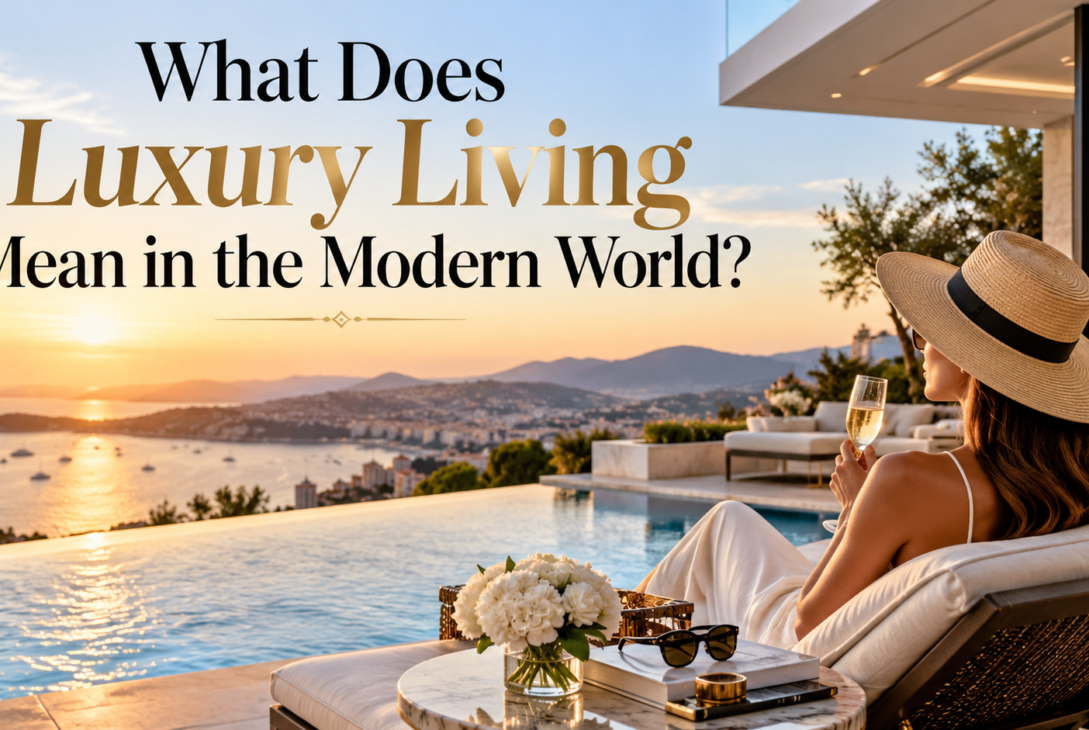
Modern luxury living prioritizes experience, privacy, sustainability, and personalization over sheer opulence. Today’s affluent buyers value wellness-focused design, smart technology, and authentic craftsmanship as much as prestige addresses. Luxury has shifted from status display to lifestyle enhancement, with time and tranquility becoming the ultimate markers of wealth.
Luxury used to be simple to define: marble floors, chandeliers, a garage full of exotic cars. Today, that definition has splintered into something far more personal and nuanced. A person might consider luxury to be a quiet morning free from notifications, a home powered entirely by renewable energy, or a wellness retreat with a private chef who understands their dietary restrictions without being told twice.
This shift didn’t happen overnight. It reflects deeper changes in how people relate to wealth, time, and well-being. As global markets mature and younger generations inherit both money and influence, the luxury real estate and lifestyle industries have had to rethink what premium living actually means.
This post explores how luxury living has evolved, what defines it today, and why the next generation of affluent buyers is rewriting the rules entirely.
How has the definition of luxury changed over time?
For most of the 20th century, luxury was synonymous with excess. Bigger homes, flashier cars, and more staff signaled success. Luxury was something you displayed, not necessarily something you experienced deeply.
That began changing as markets became saturated with material goods. When everyone with sufficient income could own a designer handbag or a luxury sedan, these items lost some of their power to signal exclusivity. Scarcity shifted from physical objects to intangible resources: time, health, privacy, and authentic experiences.
Today’s luxury consumer is less interested in owning more and more interested in living better. This doesn’t mean quality or craftsmanship no longer matter. If anything, discerning buyers scrutinize materials, provenance, and construction more closely than ever. But the goal has changed. Luxury now serves well-being rather than status alone.
What are the key features of modern luxury living?
Modern luxury living tends to center on five core pillars: wellness, personalization, sustainability, technology, and privacy. Each of these reflects a broader cultural shift toward intentional, values-driven consumption.

Why has wellness become central to luxury design?
Wellness has moved from a nice-to-have amenity to a non-negotiable feature in luxury homes and developments. Buyers increasingly expect access to elements that support physical and mental health, not just aesthetic beauty.
Common wellness features in luxury properties now include:
- Air and water purification systems that go beyond standard filtration
- Circadian lighting that adjusts throughout the day to support natural sleep cycles
- Home gyms and spa-like bathrooms designed for daily use rather than occasional luxury
- Biophilic design elements, such as natural materials, indoor gardens, and large windows that maximize natural light
This emphasis on wellness reflects a broader recognition that true luxury supports a person’s quality of life every single day, not just on special occasions.
How does personalization shape the modern luxury experience?
Mass-produced perfection no longer impresses the way it once did. Today’s luxury buyers want products, spaces, and experiences tailored specifically to them.
This shows up in bespoke furniture commissioned for a specific room, travel itineraries built around personal interests rather than standard packages, or smart homes programmed to anticipate an individual’s preferences and routines. Personalization signals that something was made with a specific person in mind, which carries far more weight than generic opulence.
Why does sustainability matter to affluent buyers now?
Sustainability has become deeply intertwined with modern luxury, driven partly by genuine environmental concern and partly by a recognition that resource scarcity itself is becoming a form of exclusivity.
Luxury developers increasingly incorporate sustainable building materials, energy-efficient systems, and eco-conscious landscaping into their projects. Buyers want homes that minimize environmental impact without compromising comfort or design integrity. This represents a meaningful departure from decades past, when sustainability and luxury were often seen as mutually exclusive.
Choose a sustainability-focused luxury property if long-term value and environmental responsibility matter more to you than maximizing square footage or traditional status markers. For buyers still prioritizing prestige addresses and conventional opulence, legacy luxury developments may still hold more appeal.
How is technology integrated into luxury homes today?
Smart home technology has moved from novelty to expectation in the luxury market. Automated climate control, integrated security systems, voice-activated lighting, and app-controlled entertainment systems are now standard features in high-end properties.
What distinguishes true luxury tech integration is seamlessness. The best systems operate invisibly in the background, enhancing daily life without requiring constant management. A luxury home should feel intuitive, not like a control panel that demands attention.
Why is privacy considered a top luxury priority?
Perhaps no element of modern luxury has grown in importance more than privacy. In an era of constant connectivity and social media exposure, the ability to disconnect and exist without scrutiny has become genuinely rare.
This is reflected in architectural choices like secluded entrances, soundproofing, and expansive buffer zones between properties. It’s also reflected in service choices, with high-net-worth individuals increasingly seeking discretion from staff, advisors, and service providers. Privacy isn’t just a feature anymore. For many buyers, it’s the entire point.
Who defines luxury differently: generational shifts in taste
Younger affluent consumers, particularly millennials and Gen Z, are reshaping luxury expectations in ways that differ meaningfully from previous generations.
Older generations often associated luxury with inherited status, tradition, and visible markers of success — think family estates, classic car collections, or recognizable designer labels. Younger buyers tend to prioritize experiences over possessions, authenticity over prestige, and values alignment over brand recognition.
This generational shift explains why experiential luxury travel, wellness retreats, and purpose-driven brands have gained so much traction. A younger buyer might choose a smaller, architecturally significant home with a strong sustainability story over a sprawling mansion with a famous address. Neither approach is wrong. They simply reflect different definitions of what makes life feel genuinely luxurious.
What role does craftsmanship still play in luxury living?
Despite the shift toward experience and wellness, craftsmanship hasn’t disappeared from the luxury conversation. If anything, buyers have become more educated about materials, construction quality, and artisanal technique.
The difference lies in motivation. Previous generations often valued craftsmanship as a status symbol. Today’s buyers value it because they understand and appreciate the skill involved. They want to know who made their furniture, where their materials were sourced, and what story sits behind a particular design choice. This desire for authenticity and transparency has pushed luxury brands to be more forthcoming about their production processes than ever before.
How can buyers identify authentic luxury versus surface-level opulence?
Not everything marketed as luxury delivers genuine value. Distinguishing authentic luxury from surface-level opulence requires looking past branding and marketing language toward substance.
Authentic luxury tends to show up in details that aren’t immediately visible: the quality of materials beneath the surface finish, the thoughtfulness of a floor plan, the responsiveness of service staff, or the durability of a product over years of use. Surface-level opulence, by contrast, often prioritizes immediate visual impact over long-term quality or function.
Choose substance over spectacle if you’re making a long-term investment in a home or lifestyle. Choose visual impact if you’re prioritizing a shorter-term experience, such as a special event or temporary rental. Understanding this distinction helps buyers avoid overpaying for style without underlying quality.
What does the future of luxury living look like?
Luxury will likely continue moving further away from material accumulation and further toward intentional living. Expect to see continued growth in wellness-integrated architecture, hyper-personalized service models, and sustainable building practices as standard rather than niche offerings.
Technology will also continue reshaping the luxury landscape, particularly as AI-driven personalization becomes more sophisticated. Homes may increasingly adapt to residents’ moods, schedules, and preferences in real time, creating living environments that feel less like static spaces and more like responsive partners in daily life.
At the same time, privacy and exclusivity will likely become even more valuable as the world grows more connected and public. The luxury of being unreachable, even temporarily, may become one of the most coveted experiences money can buy.
Redefining what luxury means for you
Modern luxury living resists a single, universal definition. It’s shaped by wellness, personalization, sustainability, technology, and privacy, but ultimately comes down to what enhances an individual’s quality of life most meaningfully.
Rather than chasing outdated status symbols, today’s luxury buyers are asking better questions: Does this support my well-being? Does it reflect who I actually am? Does it give me more time, more peace, or more genuine connection? Those questions, more than any price tag, now define what it means to live luxuriously in the modern world.
If you’re exploring what luxury means for your own life, start by identifying which of these pillars matters most to you personally. That clarity will serve you far better than following any generic blueprint for opulence.
Frequently asked questions
What is considered luxury living today?
Luxury living today centers on wellness, personalization, sustainability, smart technology, and privacy rather than purely material wealth or visible status symbols. It reflects an intentional lifestyle designed to enhance overall quality of life.
How much does luxury real estate typically cost?
Luxury real estate pricing varies significantly by location, property size, and included amenities. Rather than a fixed threshold, luxury properties are generally defined by their position in the top tier of their local market, along with premium features like bespoke design, advanced technology, and enhanced privacy.
Is sustainable living compatible with luxury?
Yes. Sustainability has become a core component of modern luxury rather than a competing priority. Many high-end developments now incorporate energy-efficient systems, sustainable materials, and eco-conscious design without sacrificing comfort or aesthetic appeal.
What’s the difference between luxury and opulence?
Luxury emphasizes quality, authenticity, and genuine value, while opulence often focuses on visible, immediate displays of wealth. A space can appear opulent without offering the comfort, function, or craftsmanship associated with true luxury.
Why do younger generations define luxury differently than older generations?
Younger buyers tend to prioritize experiences, authenticity, and values alignment over inherited status symbols or brand prestige. This shift reflects broader cultural changes around individualism, environmental awareness, and the growing importance of mental well-being.
[mc4wp_form id="5878"]